
Showing posts with label best seller rank. Show all posts
Showing posts with label best seller rank. Show all posts
Thursday, 25 August 2016
You Need To Understand The Amazon BSR (Best Seller Rank)! - amazon fba p...
- If you're confused about how BSR works, this video is for you! Leave us a comment after viewing it!

Thursday, 18 August 2016
Trying to Make Sense of Rank for Amazon FBA Sellers
- Discovered a fellow FBA seller with her own YouTube channel. This video explains Amazon selling rank. Hope you find this helpful! Share your thoughts on the comments below :)
Wednesday, 27 July 2016
HOW AMAZON SEO WORKS
Though you may think of Google when you think of search engines, when it comes to shopping search engines, Amazon is King.
As stated in The New York Times:
“In 2009, nearly a quarter of shoppers started research for an online purchase on a search engine like Google and 18 percent started on Amazon, according to a Forrester Research study. By last year, almost a third started on Amazon and just 13 percent on a search engine. Product searches on Amazon have grown 73 percent over the last year while searches on Google Shopping have been flat, according to comScore.”
And that was in 2009…

Google and Amazon SEO (search engine optimization) are similar but have some differences. One way that they are similar is that they are both keyword based. This means that both search engines are primarily based off of keywords and your ranking for each specific keyword.
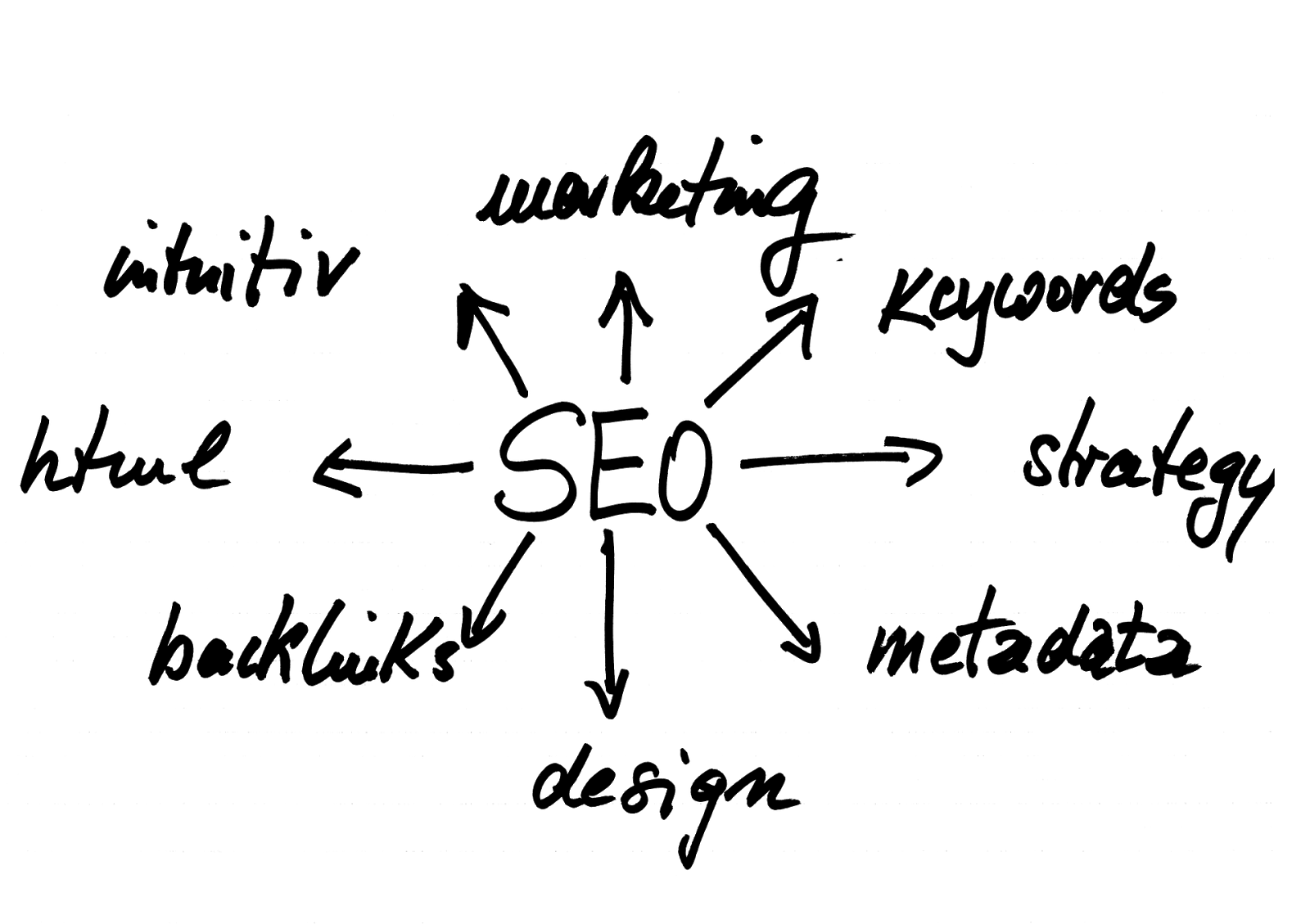
Where Amazon and Google differ is that Google’s SEO bases their ranking of a combination of shares and backlinks while Amazon bases their rankings off of which product has the best conversion rate. In my opinion, Amazon’s ranking system make more sense than Google. Google’s can be mislead fairly easily by having poor quality back links while Amazon’s can be more difficult to hack consistently.

The way you get ranked high in Amazon is through sales… Period. Yes, it can help to target certain keywords, but only if you have the sales. In my experience Amazon will rank your product based on sales first, conversion rate second, and targeted keywords last. Amazon wants to put the best selling products at the top of each search page because they assume that the products that have sold the most and have the most positive reviews have the most satisfied customers. This translate into monetary benefits for Amazon as well; the more sales Amazon can promote, the more fees Amazon collects!
Besides the basics, I have also heard driving outside traffic driven to your listing can increase your Amazon SEO ranking but that is not proven. Using companies like Zonblast or giving out a large amount (over 20) samples can increase your ranking in the short term, but if your product does not keep those high sales numbers it will de-rank rapidly. Don’t try to hack the system. You give yourself the best chance of succeeding if you sell the best product at the best price.
- Awesome! Have you mastered SEO with Amazon yet?
Friday, 22 July 2016
The Most Harmful Amazon FBA Sourcing Decision You Could Ever Make
by
Did you know that a toy on Amazon ranked 10,000 today could have been ranked 500,000 yesterday? All it takes is one sale. Just one. One sale of that toy on Amazon could change the sales rank drastically overnight.
Would you buy a toy ranked 10,000 on Amazon to resell? Would you buy a book ranked 500,000 to resell?
I know there are lots of other factors at play in how you might answer that question, but my point in asking it is to get you to look at the sales rank. You view a toy ranked 10, 000 much differently than one ranked 500,000, right?
Yet every day many, many Amazon sellers are making their sourcing decisions based on today’s sales ranks and low prices. They find a toy ranked 10,000 and snatch it up, without checking to see that it was possibly ranked 500,000 yesterday. Or maybe it’s a book ranked 100,000 that was ranked 1.5 million yesterday.
There are two main reasons why you shouldn’t base your sourcing decisions on today’s sales rank and pricing data:
1. Amazon changes their prices often.

Amazon is known to change their prices across their website 2.5 million times per day. That’s just Amazon’s prices – that doesn’t include 3rd party seller prices, which are also being changed constantly throughout the day with repricers. Now, Amazon has hundreds of millions of products, and they’re changing those prices 2.5 million times per day, which is mind blowing if you try to think about what that means. The low price on items also change throughout the day when a seller sells out of an item and the low price bumps up to the next seller. If prices are changing constantly on Amazon, why would you make a sourcing decision based solely on this one snapshot in time of the current low price?
2. Amazon updates sales rank often.

Amazon recalculates their sales ranks every hour. That’s 24 times a day that sales ranks change on Amazon! If I’m looking at an item to resell, it’s too much of a gamble to base my buying decision on what the sales rank looks like on this one hour of this one day. The current sales rank is just a snapshot in time of how this item has recently sold. I need to make my decisions based on broader information than this one snapshot.
Whether you are in a store doing retail arbitrage or you are at your desk doing online arbitrage or looking at a wholesale catalog,you need more information than this one snapshot in time. You need more than just the current low price and the current sales rank in order to decide if you want to buy 1 of an item, 10 of an item, or 100 of an item. Your hard-earned inventory money is at stake here! You want to make your decision based on the best information available.
Making this type of decision on how to spend your sourcing money without using historical data from CamelCamelCamel or Keepa is the most harmful sourcing decision many Amazon FBA sellers are making.
I would be willing to go so far as to say that making sourcing decisions without CCC or Keepa is one of the top reasons Amazon FBA sellers quit their businesses. If you’re in this same boat, you might be spending all your sourcing money on inventory without looking at the historical data, the prices tank, the inventory never sells, and you throw your hands up in despair and say, “I quit! I tried Amazon, and it just didn’t work for me.”
Now, there may be other factors at play, but for many resellers (you included) using CCC and Keepa could be a huge game changer. You could find profitable inventory that will sell in a reasonable amount of time and won’t lower quickly in price.

I’m especially disheartened when I hear resellers saying they want to quit Amazon FBA over these types of inventory problems because this problem is so easily fixable. You canlearn to read and interpret CamelCamelCamel and Keepa. The graphs can make sense, and you can use them to make smarter sourcing decisions.
Both Camel and Keepa are free, easy-to-access programs that you can use on your computer or your mobile device, either in a web browser or from your 3rd party scouting app like Scoutify, ScanPower, or Profit Bandit (Amazon Seller app does not have links to CCC and Keepa, however). It only takes an extra 20 to 30 seconds (if even that!) to look at the sales rank and sales price history of an item when you’re sourcing. You can take a quick look at how often this item has sold and how it’s been priced in the past, and you can make an educated prediction about how it will behave in the future.
I want to encourage you today if you’re making sourcing decisions without using historical sales rank and pricing data from CamelCamelCamel and Keepa — there is a better way to buy Amazon FBA inventory! You can make smarter sourcing decisions. Your business will hugely benefit if you take the time to learn how to use these powerful free resources.
- Are you a CCC or Keepa user? Tell us how these great programs helped your business out with a comment!
Thursday, 7 July 2016
Amazon FBA the different models and the route to growth:
By Julie Čolan
One of the best things about using Amazon FBA to grow your e-commerce empire is the low barrier to entry which enables some really cool and low-cost models to be adopted to start your journey towards e-commerce millions!!
I'm putting together a series of posts to cover my thoughts on the incremental steps that are needed, to take off small and ultimately, make it large!
In this first instalment, I'll look at what approaches to take at the beginning of the journey (steps 1 & 2). This is just my opinion and, as ever, I welcome the contribution of others:
Step 1: Retail Arbitrage
I'm not a big fan of the term "retail arbitrage", it just reeks of Internet Marketeer jargon to make something sound sexier and more sophisticated than it actually is. Retail Arbitrage (or RA for short) is simply about reselling stuff - specifically stuff that you purchase in brick and mortar stores that you know (or at least confidently predict) will sell at a profit on Amazon (after FBA fees). Although I hear about some people making incredible profits from adopting this model, I don't believe it can be easily scaled to a point that is going to make you mega-rich, it also doesn't really qualify as a provider of the magical "passive income" as you have to spend your days rummaging through the bargain sections of your local ASDA!
Still, it is lots of fun (and quite addictive!) and a great low-entry barrier place to start and to learn about the intricacies of selling on Amazon (and maybe getting un-gated in a few categories too :-) - lots lots more on that in later posts (e-book for ungating is under development:-)).

How do I do it? This one is really easy, download the Amazon seller app / Profit Bandit on your phone and walk around your local stores zapping the barcodes of anything that looks like it may be a bargain - you're app will tell you how much profit you could make on each item as well as the Best Seller Rank (so you can gauge how quickly the items are selling). Once you've loaded up with stock, chuck them in a box, set up a shipment in seller central and wave them goodbye before watching the sales roll in (hopefully!).
Tip: I have printed off the categories and rank tables (my preference is top 1%) and carry that at ALL times in my bag. Also, use Keepa or CamelCamelCamel to check BRS consistency.
Step 2: Online Arbitrage
Again with the "arbitrage" terminology!! In case you haven't worked it out from the title, Online Arbitrage (often labelled OA) is simply buying stuff from online stores and reselling on Amazon. There are plenty of benefits of OA, for a start you don't have to get out of your PJs and drive / walk to your local stores to find your stock!
Seriously though, the obvious benefit is that you can do ALL of the OA work from your laptop. Once you graduate to OA and are purchasing relatively high quantities of stock then I would advise employing the use of a FBA Prep Centre (more on these in later posts) who will take delivery of your stock, prep for FBA (the clue is in the name!) and send it straight off to the Amazon fulfilment centre.
See at this point you don't have to see / touch / smell the stock at all and the incremental cost of using a prep centre is usually pretty minimal. Now you start to really see the potential, it's not quite as much fun as RA but it starts to feel more like a business - and one that can scale.

How do I do it? Do some online shopping! Check prices of items, compare to Amazon, make sure there is a reasonably good BSR (use Keepa or CamelCamelCamel to check BRS consistency.) and then buy buy buy. Get the goods shipped to you, or an FBA prep centre, and then on to Amazon to sell sell sell!
Next time I'll delve into Step 3 (Distribution) which I have found to be a particularly lucrative approach....
FBA Article From Entrepreneur.com
Hi all, I just wanted to share this article from Thomas Smale @ entrepreneur.com - it's an interesting and succinct intro inyo the world of Amazon FBA - I'd like to know what you all think after reading this:
Hi all, I just wanted to share this article from Thomas Smale @ entrepreneur.com - it's an interesting and succinct intro inyo the world of Amazon FBA - I'd like to know what you all think after reading this:
Amazon FBA -- "Fulfillment by Amazon" -- is fast becoming a buzzword among entrepreneurs. Over the years, there's been a lot written about Amazon affiliate marketing to help people get started, but not about FBA. What is all the fuss about? Why is there so much commotion about the FBA business model right now?
To put it simply, it could be the future for entrepreneurs. It has never been easier to sell products on a massive, trusted ecommerce platform, and get your fair share of the market. Best of all, you won't find too many business opportunities out there with this degree of scalability built right into them.
So let's take a closer look at the FBA opportunity, and how you can create an escape plan for the nine-to-five.
What is Amazon FBA?
The program allows virtually anyone to sell their goods on the Amazon platform. Fulfillment is one of the biggest challenges of any ecommerce business. With FBA, Amazon will store your products in one of its warehouses, ship them to your customers, handle all refunds and returns and provide excellent customer service.
This does not mean that you don't have any responsibilities as a seller. What it does mean is that you can free up a lot of time to focus on high-level, value-generating activities such as driving traffic to your product page or optimizing your conversion rate.
Why Amazon FBA is better than an ecommerce store.
Besides the fact that fulfillment is handled by Amazon, there are several more advantages to leveraging FBA. For one, orders placed through Amazon are processed and shipped faster than those sent out from retailers. FBA can help your products gain more visibility in the marketplace, and that can translate into more sales for you.
FBA also makes your products eligible for Amazon Prime free two-day shipping, free shipping and other similar options, which customers love. Finally, one of the biggest advantages of FBA is that Amazon is a trusted brand. It has worked hard to optimize the checkout process and earn credibility with customers. You as a seller get to leverage the reputation of a trusted and well-known company.
How to get set up with FBA.
Here are the five basic steps you need to take to start building your FBA business:
- Create an Amazon Seller Central account. It is advisable to sign up for a professional account, which has a monthly fee associated with it.
- Choose a niche. Some are good, others are not worth getting into. Do your research and brainstorm product ideas.
- Find a supplier. Once you know what products you're going to be selling, start building a working relationship with a reliable supplier. Ask for a sample, work out the lead time and calculate what kind of margin you have on your products.
- Create a listing for your product. Optimize your product page with the right keywords and content.
- Drive traffic. Send your target audience to your product page to increase sales.
According to Josh Shogren of Passion Into Paychecks, picking the right product is the key to success with FBA businesses: "It is vital that you spend a lot of time finding the right product that will give you the best chance for success."
Shogren suggests that some of the most important factors include:
- The price point of the product should be somewhere between $10 and $50.
- The product should be as light as possible.
- Check to see if any potential competitors have a 5,000 best seller rank (BSR) or lower in their primary category.
- Make sure there aren't any brand names within the product category or niche.
- If possible, sell a product that isn't easily broken.
- The more reviews a product has, the greater the competition is. Fifty or fewer reviews on first page products is a good indicator that you can break into the market.
- The cost of manufacturing should be 25 percent or less of the actual sale price.
How to be a successful FBA seller.
"Top Amazon sellers aren't like the rest," says Lauren Shepherd at Teikametrics. "The most successful sellers have adapted to the evolving ecosystem that is online retail by treating selling on Amazon like trading on the stock market."
According to Shepherd, the following six factors are crucial to your success:
- Scaling a business is easier when fulfillment logistics are handled by Amazon.
- Be willing to admit when you are wrong, and make adjustments accordingly.
- Manage your inventory, risk and cash flow.
- Focus on cash flow and access to working capital.
- Don't try to be right -- focus on making money instead.
- Measure your growth by quarters or years, not by weeks.
Why start a FBA business?
Have you ever thought about escaping the nine-to-five working life? Have you ever considered escaping the cubicle? With a successful FBA business, you have the opportunity to design your lifestyle and make your dreams a reality. Location and financial freedom are within your reach. FBA is the future for people who want to make money online and live a life of their choosing.
Consider the case of Spencer Haws of Niche Pursuits, who recently published a post showing how he sold $40,639 worth of physical products in 30 days.
"Amazon FBA is the real deal," he said. "It's a very real business, and I am seeing very real income for it."
Final thoughts
If you are interested in learning more about selling on Amazon, there are some great podcasts, such as Up Fuel and The Amazing Seller, that are covering the topic. FBA is quickly going mainstream, and there are more and more people talking about the freedom that is available through a business model such as this.
If that wasn't enough, it is also possible to sell an Amazon FBA business. As with any other online business, you can have an exit strategy in place and move onto new ventures and greener pastures if that's what you want to do.
For many, the FBA business model has the potential to turn their dreams of financial and location independence into reality, and is certainly looking like the way forward for entrepreneurs everywhere.
Link Here: https://www.entrepreneur.com/article/252685
Subscribe to:
Posts (Atom)